New WSJ Report: Bathrooms are the Deadliest Room in the House
In this blog:
- Architect Lloyd Alter told the Wall Street Journal that the bathroom is the most dangerous room in the house. He argues that poor design, not a person’s age alone, is often the problem.
- Features like thin-rimmed freestanding tubs, tub-shower combos, poorly placed shower valves, polished large-format tile and toilets without nearby supports increase fall risks.
- Many of these concerns can be addressed without a major remodel, starting with simple additions like grab bars.
People use the bathroom every day, but rarely consider how its design can increase the risk of falls and injuries. Toronto-based architect and author Lloyd Alter recently told the Wall Street Journal (WSJ) that poor bathroom design can make it the most dangerous room in the house.
Why Bathroom Design Matters for Fall Prevention
In his WSJ interview, Alter explained how bathroom designs can increase fall risks, rather than a person’s age being the only factor. Here are some of his top reasons:
| What He Argues | What It Means for Your Bathroom |
|---|---|
| Falls are a design problem, not an inevitable part of aging | The room can be changed. Look at the fixtures and layout before assuming age is the problem |
| Freestanding tubs are unsafe for older users | Thin rims, rounded floors and no adjacent wall mean no safe transfer and nowhere to mount a bar |
| The tub-shower combo is the most common hazard | Getting out means balancing on one wet foot while the other clears the tub wall |
| Shower controls belong away from the water stream | Put the valve near the entry and add anti-scald protection |
| Matte and small-format tile beat polished and large | Specify slip resistance at purchase—it cannot be added to a floor later |
| Toilets are a fall site nobody treats like one | A grab bar beside the toilet is the most-skipped fix in the room |
| Technology isn’t a substitute for safe, accessible design | Connectivity is not safety. Prioritize fixtures that can be used safely at any age |
Rethinking Bathroom Falls
Alter is an architect and former real estate developer who teaches sustainable design at Toronto Metropolitan University. He is also the design editor at Treehugger. As part of his focus on sustainable design, he advocates for rooms that remain functional for as long as possible.
Alter often uses the term “killer bathroom,” and with good reason. Falls are the leading cause of injury-related deaths among seniors, and many of these accidents happen in the bathroom, according to the U.S. Centers for Disease Control (CDC).
Bathroom falls among older adults are often attributed to age-related changes in balance, mobility and vision. Alter challenges that assumption, arguing that poor bathroom design is a major contributor to fall risks.
“Unlike deaths from guns and cars, we don’t talk about deaths from falls as something we can fix,” Alter said in the article. “We apparently accept them as a function of aging, when they’re really about bad design.”
To understand Alter’s perspective, let’s dig deeper and explore his take on some top bathroom design flaws.
The Trouble With Traditional Tubs
The sculptural, standalone soaking tub has been a design staple for two decades. Alter joked in the article that owners should reinforce the ceiling, because you will need “a winch and a bosun’s chair” to get out of such a tub as you age.
A tub edge can only serve as a safe transfer surface if it is wide enough for someone to sit on before moving their legs into or out of the tub. Even a standard tub wall can be a problem. It’s roughly 14 to 16 inches high and must be cleared while balancing on the opposite leg. Alter recommends a walk-in shower to make the bathroom more sustainable.
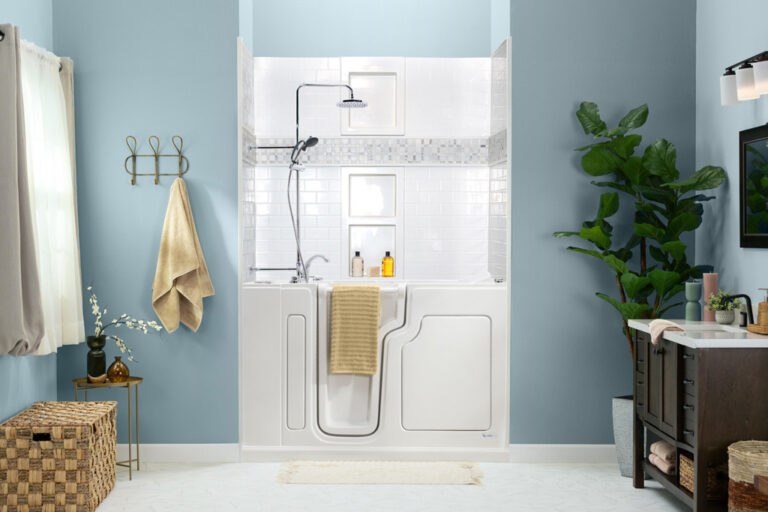
Safe Step’s Hybrid Tub combines features a shower with the convenience of a low-threshold tub to help eliminate step-over concerns.
Shower Control Placement
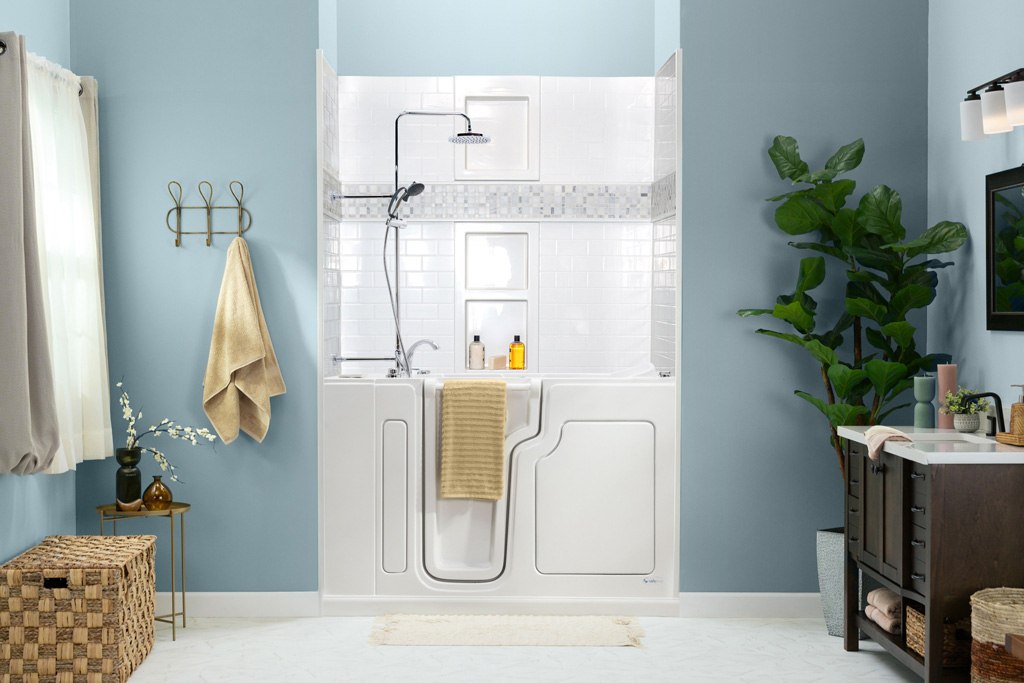
Most showers place the controls directly under the spray, making it difficult to safely adjust the water temperature. Alter recommends positioning the valve near the entry so you can turn on the water and set a comfortable temperature before stepping in. For households with older adults, a water heater setting of 120°F is generally ideal.
Tile Type Makes a Difference
Alter pointed out that bathroom flooring is often chosen for looks rather than grip. Polished tile can become especially slippery when wet, making matte tile a safer choice for bathrooms. Smaller tiles can also improve traction because the additional grout lines create more textured surfaces.
Don’t Overlook the Toilet
Alter noted that sitting down on or standing up from the toilet can contribute to a surprising number of bathroom injuries, sometimes because of underlying physiological responses.
He emphasized that people who are prone to orthostatic hypotension can feel lightheaded or dizzy if they stand up too quickly after using the toilet, causing a fall. Straining while using the toilet can also trigger vasovagal syncope, a sudden drop in heart rate and blood pressure that can cause fainting.
Zero Reasons To Wait With Special Financing
Receive $2,000 off and a free toilet (installation included) with the purchase and installation of a Safe Step Walk-In Tub.
$0 Down, 0% Interest & No payments for 12 months*
One Simple Fix: Grab Bars
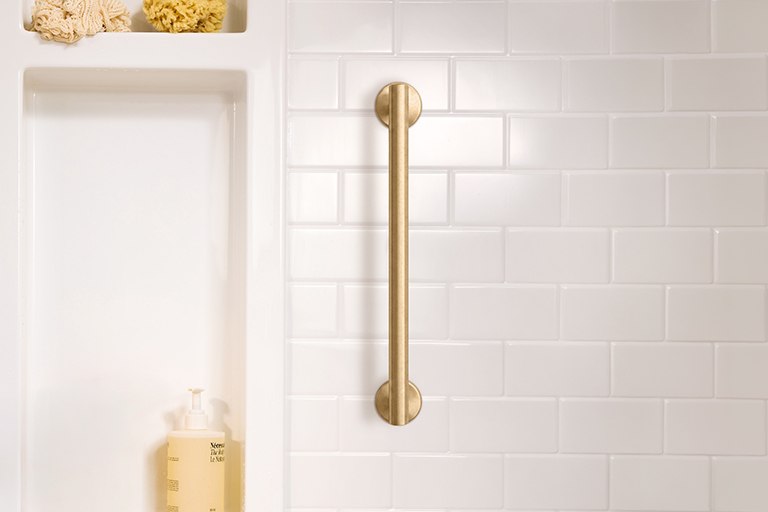
Making grab bars a standard bathroom feature is a crucial component of sustainable design, Alter said. “There are many more deaths from falls than fires, but smoke detectors are required everywhere,” he added.
Today’s designers often focus on adding digital features when simple supports, like grab bars, can provide the stability and assurance homeowners need to age in place safely.
Steps To Improve Bathroom Safety
With Alter’s design theories in mind, you can make simple changes to your existing bathroom to make it sustainable and safe for many years.
- Remove throw rugs
- Set the water heater to 120°F
- Move toiletries to between shoulder and hip height
- Install grab bars anchored into wall studs 33 to 36 inches above the floor beside the toilet and inside and outside the tub or shower. Alternatively, use a mobile toilet grab bar for added support near the toilet
- Add a shower seat or bench for support. If space allows, consider adding a place to sit while drying off
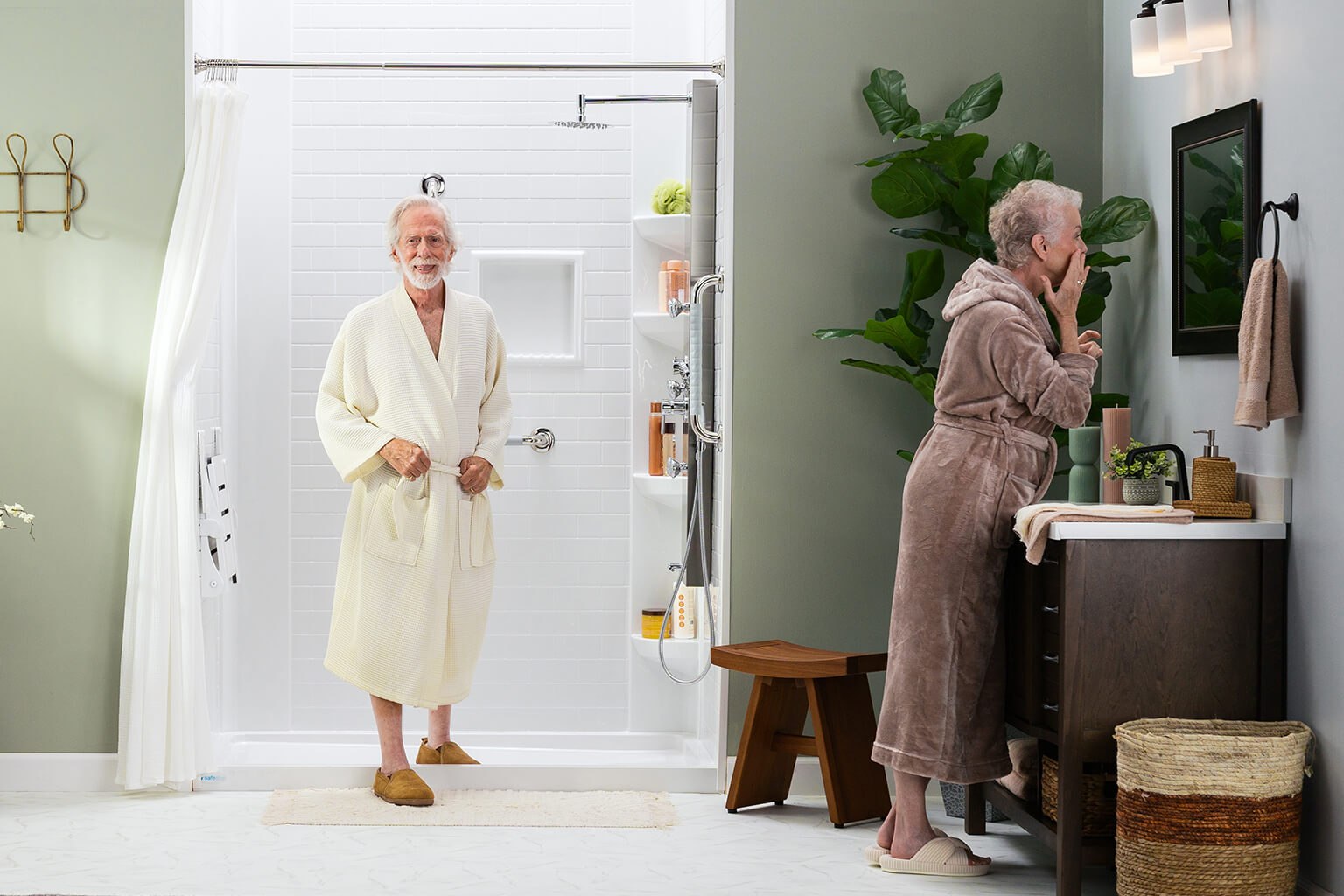
- Make a plan to replace the step-over with a walk-in tub or shower
For a full room-by-room checklist, download our guide to preventing falls at home.
Safe Step Helps Make Bathrooms Safer
Safe Step has a long history of helping improve bathroom safety. Our walk-in tubs and showers provide built-in grab bars, low-threshold entry, slip-resistant flooring and other advantages that help you age in place. Safe Step Walk-In Tubs and Showers can be professionally installed in as little as one day, helping address common bathroom fall risks without a lengthy renovation.
Request a free, no-obligation consultation to start improving your bathroom’s design.