Best Options for Aging in Place With Medicaid Support

In this blog:
- Medicaid can support aging in place through in-home care, HCBS waivers, transportation, adult day services and some medically necessary home modifications.
- Medicaid does not cover a walk-in tub or shower. Coverage and eligibility vary by state, so check with your state Medicaid office or Area Agency on Aging to understand available programs and requirements.
- Safe Step believes everyone deserves the dignity of safe, independent bathing, and we help customers achieve that reality every day through special discounts and financing.
For the 75 percent of adults ages 50-plus who want to remain in their current home as they grow older, Medicaid may be a valuable resource. Medicaid can fund in-home care and some home modifications, but does not typically cover a walk-in tub. See what’s covered, who qualifies and how Safe Step can help you save on accessible bathing solutions.
Overview of Medicaid Support for Aging in Place
Medicaid is a U.S. government health insurance program for people who meet certain income and eligibility requirements. It is funded jointly by the federal government and individual states, so eligibility and benefits can vary depending on where you live. Here’s a rundown of how Medicaid helps:
| Type of Support | Typical Medicaid Coverage |
|---|---|
| In-home and personal care | Often. Medicaid may cover help with daily activities and other home-based services, depending on the state and program. |
| Short-term recovery care | Often. Medicaid may cover eligible home health, rehabilitation or skilled nursing services needed after surgery, an illness or an injury. |
| Transportation to medical appointments | Often. Medicaid generally provides non-emergency medical transportation for eligible beneficiaries who don’t have another way to get to covered care. |
| Adult day services | Sometimes. Certain Medicaid programs and waivers may cover daytime supervision, personal care, meals and other services. |
| Long-term nursing facility care | Yes, for eligible individuals. Medicaid is a major payer of long-term nursing facility care for people who meet financial and medical requirements. |
| Home modifications | Sometimes. Certain Medicaid waivers and state programs may cover medically necessary accessibility or safety modifications. |
| Walk-in tub or shower | Unlikely. Safe Step offers financing and special discounts to help make safe bathing accessible. |
Source: Medicaid.gov

Understanding How Medicaid Supports Aging in Place
Medicaid primarily pays for care and services that help people remain at home, rather than in-home modifications. Created alongside Medicare in 1965, the joint federal-state program provides health coverage to eligible low-income Americans, with benefits and eligibility varying by state. More than 7.2 million low-income U.S. seniors enrolled in Medicare also receive Medicaid coverage.
Medicaid spends more than $563.7 billion annually on long-term care services. Home and Community-Based Services (HCBS), introduced in 1983, allow states to provide options to people who might otherwise require care in a nursing home or other institution. Through HCBS programs, states can help older adults and people with disabilities live independently at home.
Nearly 33 percent of seniors who qualify for Medicaid use HCBS. These services often include personal care, adult day health, respite care and some approved home modifications, providing extra support to seniors who want to age in place.
Medicaid Programs Helping Seniors Stay Home
Navigating Medicaid programs can feel complicated, especially when coverage differs from state to state. Knowing the main options can make it easier to figure out where to start.
| Medicaid Program and Options | How They Support Aging in Place |
|---|---|
| HCBS 1915(c) | These state waiver programs provide home- and community-based services to eligible people who might otherwise need institutional care. States may limit enrollment. |
| Program of All-Inclusive Care for the Elderly (PACE) | Provides comprehensive medical and social services to eligible adults 55 and older who meet their state’s nursing-home level-of-care criteria but can live safely in the community. PACE currently serves more than 98,000 people through programs in 33 states and Washington, D.C. |
| Money Follows the Person (MFP) grants | A Medicaid demonstration that helps eligible people transition from institutional care to community living. State programs may provide transition assistance, including certain home accessibility modifications. |
| Self-directed services | Depending on the state and Medicaid program, participants may have greater control over who provides their personal care and how certain Medicaid funds are used. Some programs allow participants to hire eligible family members or others they choose to provide care. |
Does Medicaid Cover Home Modifications and Walk-In Tubs?
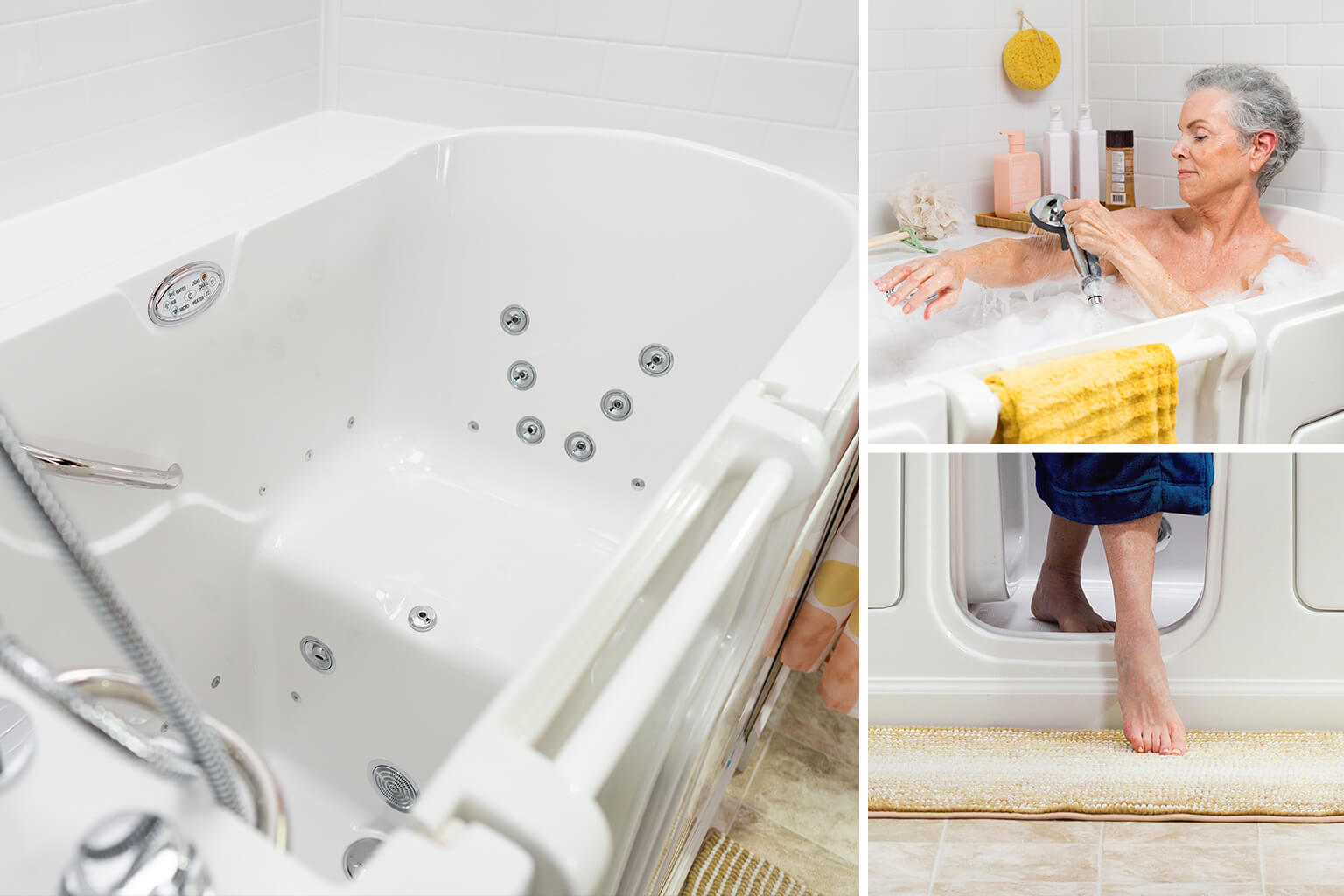
Small changes around the home can make a big difference when everyday activities such as climbing stairs or getting in and out of the tub become more difficult. Brighter lighting, grab bars, stairlifts and accessible bathing solutions can make everyday tasks safer and easier. At least 80 percent of falls at home happen in the bathroom. A walk-in tub or shower eliminates the high step-over of a traditional tub and can provide therapeutic features to soothe aches and pains associated with arthritis and other common conditions.
While neither Medicare nor Medicaid helps with the cost of a walk-in tub or shower, Safe Step offers third-party financing and special discounts to qualified individuals. During your in-home consultation, your Safe Step design consultant can help you understand the financial assistance programs and services that may be available in your area.
Who Qualifies and How To Get Started
If you or your loved one is exploring options for aging in place, planning for the future can provide peace of mind. Applying for Medicaid can be a lengthy process. An estimated 710,000 people were on waiting lists for services in 40 states in 2024, with an average wait of 40 months.
Here’s how to get started:
- Call the state Medicaid office or local Area Agency on Aging to confirm which programs may fit your needs.
- Ask for a functional needs assessment. Waiver eligibility is typically based on individual needs and determined on a case-by-case basis.
- Get physician documentation of bathing, transfer or difficulties related to bathing, transfers or fall risk.

Other Ways To Save on Safer Bathing
If you do not qualify for Medicaid, other options may provide financial assistance. In 2026, only about 21 percent of individual Medicare Advantage plans offer coverage for bathroom safety devices. Rebates for veterans and non-profit assistance may also be available.
Safe Step, manufacturer of North America’s No. 1-selling walk-in tub, offers special discounts and third-party financing with credit approval. Through our Blue Rewards Program, we provide $750 off per person for your walk-in tub or shower. If you or your loved one has arthritis, nerve problems, diabetes, sciatica or a variety of other health issues, you may qualify for a rebate of up to $1,500 per household.
A Safe Step design expert will outline your options during your in-home consultation. You can also explore our comprehensive pricing guide to learn more.
The Benefits of Choosing Safe Step
At Safe Step, we believe everyone deserves the dignity of safe, independent bathing. We’ve helped more than 200,000 customers simplify their daily routines with low-threshold entry, convenient grab bars and slip-resistant flooring. A handheld shower wand, temperature-balancing valve and optional therapeutic features add comfort and convenience to the bathing experience.
Our walk-in tubs and showers are made in Tennessee and come with a lifetime limited warranty for as long as you live in your home. Request a free quote to learn more about the benefits of our premium products.
Frequently Asked Questions
Medicare and Medicaid typically do not cover walk-in tubs because they are considered home modifications rather than durable medical equipment. A Safe Step design consultant can help you understand the financial assistance options available in your area.
PACE provides an integrated package of health and long-term care services, while Medicaid waivers fund specific services that help people remain at home or in the community.
Approximately 72 percent of older adults expect to need grab bars to age in place safely. With built-in grab bars, a walk-in tub or shower can improve bathroom safety, make bathing easier and support aging in place. Before buying, consider the total installed cost, accessibility features, available bathroom space and how well the option will meet your long-term mobility needs.